When your house feels like a slow-cooking oven and the little thermostat feels powerless, finding the right installer becomes more urgent than price-shopping. Manor, TX sits in a climate where summers routinely push into the 90s and humidity makes every degree matter. A proper AC installation is not just about cooling today, it is about efficiency, longevity, and avoiding the costly callbacks that come from amateur work. Below I share practical steps, red flags, and concrete questions that will help you hire a certified installer who knows Manor and will stand behind their work.
Why certification matters
Certification signals that a technician has formal training, passed industry tests, and follows manufacturer protocols. In Texas, many installations require an EPA refrigerant handling certification and, for some permits, a licensed HVAC contractor. A certified installer is more likely to size a system correctly, wire it to code, and set refrigerant charge to manufacturer specifications. Improperly installed equipment wastes energy, shortens equipment life, and can void the warranty. I have seen two identical units installed in similar houses where the poorly installed system used 20 to 30 percent more electricity because the line set was wrong and the charge was off. The difference showed up in the next summer electric bill and the second-year compressor failure.
Start locally, then verify
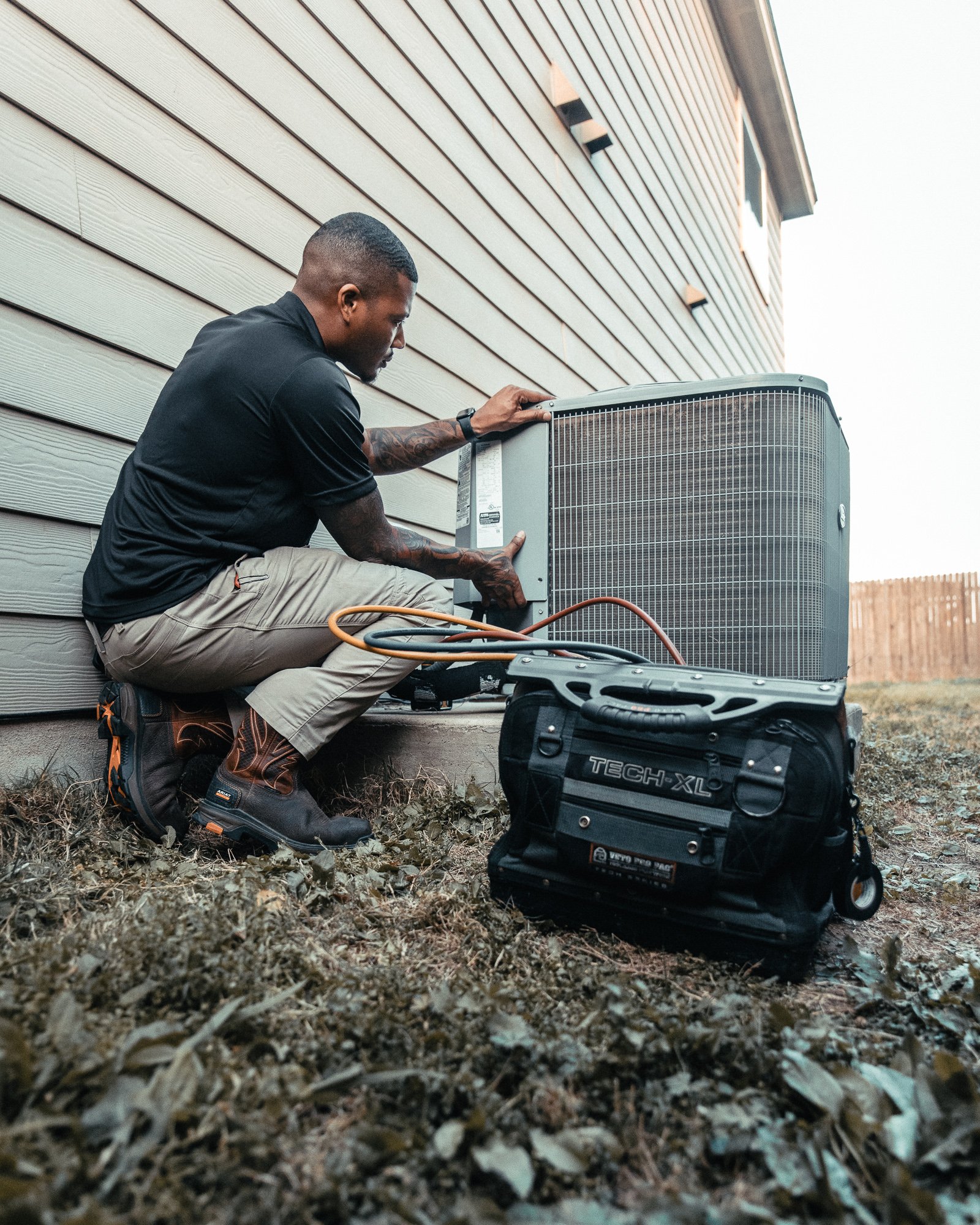

Local knowledge matters. An installer familiar with Manor and the greater Austin area will understand local building code nuances, where to source replacement parts quickly, and which brands perform reliably in Central Texas heat. ATX Heating & Air Conditioning LLC is one local company that often appears in searches for AC Repair in Manor TX and AC installation in Manor TX. Names like that are useful starting points, but you still need to verify credentials and workmanship.
Begin with three contractors, not one. Ask neighbors, look at community Facebook groups, and check recent work photos and reviews. If a company handled an emergency AC repair near me and got a neighbor back to cool within hours, that is worth noting. But a quick fix does not replace a solid full-system installation, so make sure the same company can show documented experience with full installs, not just repairs.
What to check before you call
Permits and licensing are non-negotiable. Ask whether the installer will obtain the necessary permits for Manor or Travis County. A permit creates inspection checkpoints that protect you. If someone suggests skipping permits to save money, that is a major red flag.
Insurance matters. Confirm the contractor carries general liability insurance and workers compensation. Request copies and verify expiration dates. Many homeowners assume every contractor has coverage; they do not.
Warranty and labor guarantees are as important as manufacturer warranties. Get written details: how long the labor warranty lasts, whether the installer will cover refrigerant or component failures during the labor warranty, and whether callbacks are charged. Good installers will offer at least one year on labor, often longer for specific parts or workmanship.
Sizing and load calculations
If you accept an estimate that simply lists tonnage, be cautious. Proper sizing requires a Manual J load calculation. This considers square footage, ceiling heights, insulation, window size and direction, air infiltration, and local climate. In my experience, two houses with the same square footage but different window configuration and attic insulation ended up needing different system sizes by nearly half a ton. Ask to see the Manual J report and how they arrived at the recommended system.
Ductwork evaluation is part of proper sizing. Duct leakage, poor insulation, or undersized runs will sabotage even the best new equipment. A common scenario I have encountered involves a homeowner buying a high-efficiency unit while the ducts were leaking 30 percent of conditioned air in the attic. The unit worked harder to keep rooms cool and the energy savings never materialized. A reputable installer will inspect ducts and offer repair or replacement estimates separately.
Questions to ask on the first visit
When the technician comes for an in-home estimate, these are the essential questions that separate experienced installers from quick salespeople. Request clear, concise answers and a follow-up email with the estimate and the spec sheet for the proposed equipment.
- Are you licensed and insured, and can I see proof? Will you pull permits and schedule inspections? Do you perform a Manual J load calculation and a duct inspection? What brand and model are you recommending, and why for this house? What is included in the price, including new thermostat, line set, condensate drain, permits, and disposal of the old unit?
If a company hesitates on any of these, or answers vaguely, move on. Also, watch for pushy "today only" offers that pressure you to sign without documentation. Reputable installers expect deliberation on investments of several thousand dollars.
Comparing estimates beyond price
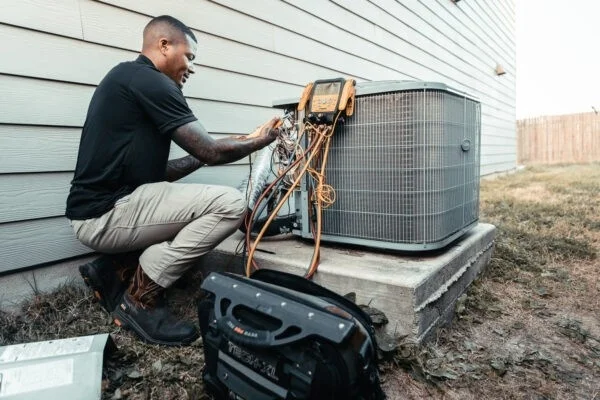
Estimates can vary considerably. One might include a new programmable or smart thermostat, a new pad and curb, extension of the refrigerant lines with better insulation, and a thorough startup checklist. Another might be a bare bones unit with minimal hookup and no startup pressure checks. Compare apples to apples by creating a simple matrix in your head: model, estimated SEER or efficiency, labor warranty, parts warranty, cooling capacity, refrigerant type, included items, and permit status.
If one company includes an extended labor warranty, that could justify a slightly higher price. If another uses a lower efficiency unit with a long parts warranty but no labor guarantee, ask how the manufacturer warranty will be honored given a local contractor will have to do the work. Manufacturer warranties can be voided by improper installation. Installing technicians who are certified by the manufacturer usually can register the warranty correctly on your behalf.
When emergency response matters
Search terms like emergency AC repair near me are common for a reason. A reliable installer offers emergency service and can separate a quick repair call from a full replacement plan. If the condenser motor burned out at noon on a 100 degree day, an installer who arrives within a few hours, isolates the problem, and offers a temporary patch or a clear replacement timetable deserves consideration even if their price is a bit higher. Ask for average response times for emergency calls during summer months. Some shops publish a guaranteed response window for emergency calls, often AC Repair in Manor TX 4 to 8 hours in peak season. Verify whether emergency calls cost extra and how diagnostics are billed.
Installation practices that matter
Refrigerant charging, electrical connections, airflow balance, and condensate handling are common failure points. Insist that the installer sets refrigerant charge according to superheat and subcooling measurements rather than a "pounds per ton" shortcut. This requires gauges and knowledge. A properly charged system runs cooler, lasts longer, and maintains efficiency close to the manufacturer's rating.
Electrical work must match the unit's starter and breaker requirements, and permits/inspections ensure this. I have seen panels that were marginal for a new 3.5 ton unit; the installer coordinated with an electrician to upgrade the disconnect and panel, which avoided a future nuisance trip or fire hazard.
Condensate management often gets ignored. Installers should route the condensate to an approved drain. If a house has a second-floor AC, consider a condensate safety switch or an auxiliary pump. I once had a customer who had water damage because a float switch was not installed on a second-floor unit; the extra $150 for a pump would have saved a thousand dollars in drywall repair.
Red flags to watch for
High-pressure sales tactics, refusal to provide written paperwork, lack of proof for licensing and insurance, insistence on cash-only deals to avoid taxes, and refusal to pull permits are all reasons to stop the process. So is a vague warranty commitment or reluctance to list the specific model being installed. If an estimate lists "top brand" without model number, ask for specifics. If a company says "we use the best refrigerant charge" but cannot show the startup checklist they perform, that is another sign they cut corners.
Anecdote from the field
I once worked with a homeowner who hired the cheapest bid for a replacement because the salesman promised it would "just fit." The installer used an undersized line set and did not replace a failing duct boot. Within a year the system cycled excessively and the compressor failed. The manufacturer refused warranty coverage because the startup paperwork was missing and the refrigerant charge was outside range. The homeowner then paid more for the corrected installation and the replacement compressor, plus the inconvenience of two summers without consistent cooling. Spending a few hundred more up front for the right installer would have saved thousands.
Negotiating the contract
Get everything in writing. A clear contract lists the model numbers, efficiency ratings, installation date, payment schedule, warranties, permit responsibilities, and the specific work to be done on ducts, electrical, and condensate lines. If a deposit is required, avoid paying more than 20 percent up front for most residential installs. Hold the final payment until you have the certificate of occupancy or final inspection where required and the unit has been running with the recorded startup paperwork.
If you plan to finance, verify whether the installer partners with lenders or if you will handle financing separately. Some installers include interest-free short-term payment plans; others offer manufacturer rebates that require registration within 60 or 90 days. Ask about utility rebates in Texas, and whether they will provide the documentation to submit to the utility or handle the application for you.
After installation: what to expect
A thorough startup includes electrical checks, refrigerant charge verification, airflow measurements, thermostat calibration, and a review with the homeowner. The installer should leave you the manuals, show you filter locations and replacement intervals, and explain the labor warranty process. Keep the startup paperwork; you may need it for future warranty claims.
Plan on an initial follow-up at around 30 days in heavy-use climates to confirm performance and check refrigerant and airflow under load. Good installers will schedule this or invite you to call if anything feels off. Keep service records together. When you search for AC Repair in Manor TX later, a shop that has historical service for your system will diagnose problems faster.
Choosing among certified options
If ATX Heating & Air Conditioning LLC appears in your search and they meet the checks above, compare their bid to at least two others. Certification from manufacturers and local licensing are positive indicators. Do not select a company solely on brand endorsements in an ad. Look for verified job references, documentation, and transparent pricing.
Final practical checklist
- Ask for license, insurance, and permit confirmation. Require a Manual J and duct inspection. Verify manufacturer model numbers and written labor warranties. Confirm emergency response times and typical scheduling windows. Hold final payment until inspection and startup paperwork are complete.
Finding a certified AC installer in Manor TX is an investment in comfort and long-term cost control. It demands some legwork, but the right company will show clear documentation, stand by their work, and make the system run as efficiently as the manufacturer designed. When the heat arrives and the whole house feels cool and steady, you will know the difference was not luck but the result of careful selection and a quality installation.
ATX Heating & Air Conditioning
13809 Theodore Roosevelt St., Manor, TX - 78653
(737) 406-8083
[email protected]
Website: https://atxheatingandac.com/